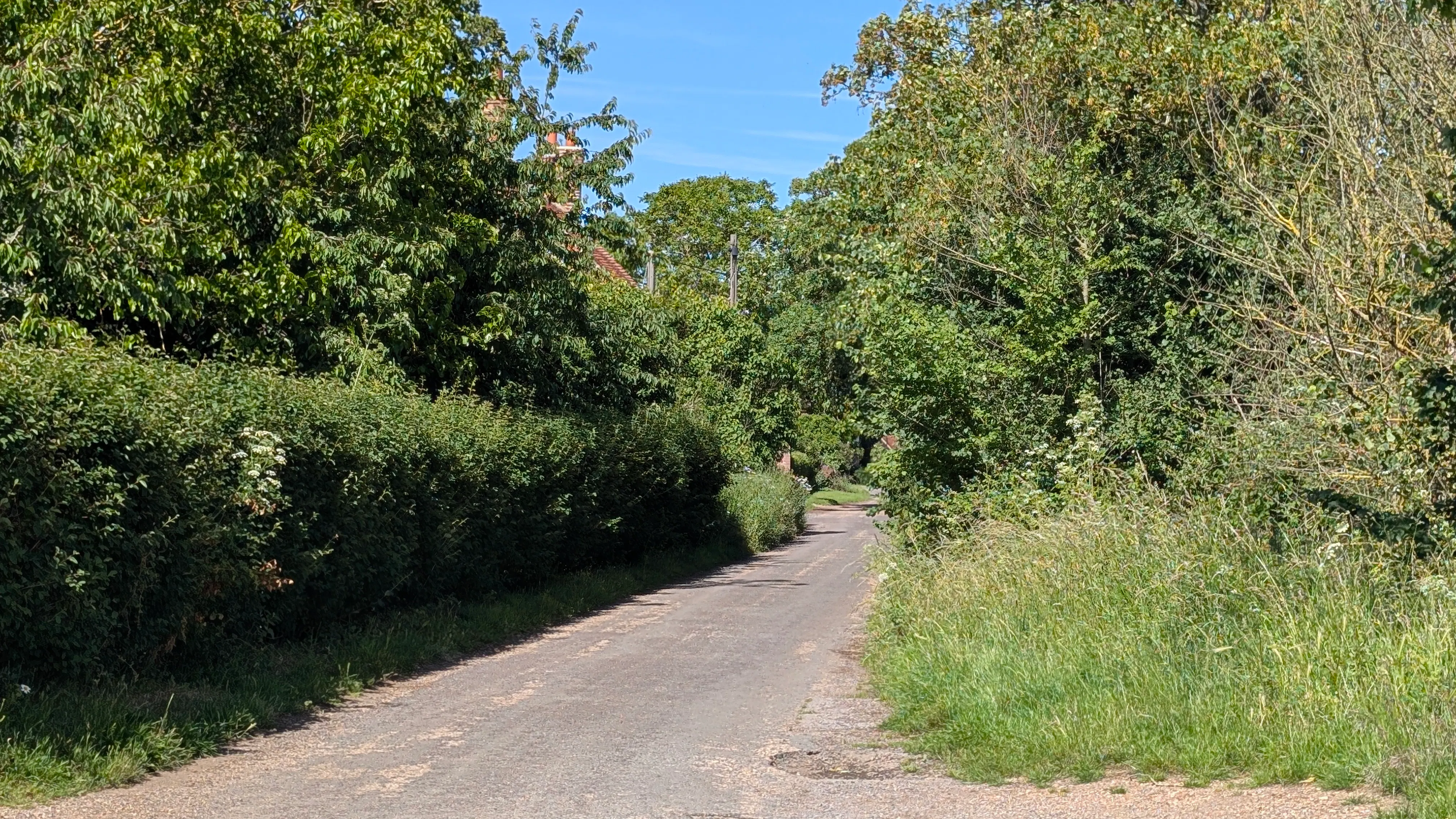
Experimental 'Quiet Lane' - Stanton St John: Shepherds Pit Lane

Share Experimental 'Quiet Lane' - Stanton St John: Shepherds Pit Lane on Facebook Share Experimental 'Quiet Lane' - Stanton St John: Shepherds Pit Lane on X (formerly Twitter) Share Experimental 'Quiet Lane' - Stanton St John: Shepherds Pit Lane on Linkedin Email Experimental 'Quiet Lane' - Stanton St John: Shepherds Pit Lane link

Consultation status: The Shepherd’s Pit Lane quiet lane trial is now live and a consultation survey is available to complete from 12 noon on Monday 28 September 2026. The survey will be open for at least six months to gather feedback on the trial.


Quiet lanes

Quiet lanes are designated minor roads where motor traffic is reduced to make it safer to walk, wheel, cycle and ride a horse. By removing through traffic, quiet lanes can reduce vehicle numbers and speeds, lower the risk and severity of collisions, and make minor roads feel calmer and safer.

All through traffic is removed using signs, speed limits and physical measures such as bollards or gates. An alternative route must always be available to maintain access for residents, farmers and landowners, local businesses and emergency services.

A variety of quiet lanes have already been introduced in Oxfordshire, in response to local concerns about motorised traffic flows, speeds, and road safety. They range from signage only to gated roads and full road closures. We have now formalised how we identify, trial, and designate a quiet lane to ensure the process is consistent across the county and will be trialling several new quiet lanes that use bollards or gates. This reflects evidence that shows signs alone do not change how drivers use a road.

The quiet lanes programme is voluntary and locally led. They are only implemented where there is local support, a clear evidence based case and a suitable alternative route for motor traffic.

More information can be found on the quiet lanes web pages of our website.


Shepherd’s Pit Lane quiet lane trial

The Shepherd’s Pit Lane quiet lane was developed to address inadequate local walking and cycling options before the decision was made to trial quiet lanes more widely. Shepherd’s Pit Lane will be monitored and reviewed in accordance with the new policy.

An 'Experimental' Traffic Regulation Order (ETRO) has now been made - which came into force on Monday 21 September 2026. The order introduces a quiet lane motor restriction in Shepherds Pit Lane, Stanton St John. The restriction will allow access for residents, farmers and landowners, with a suitable alternative route to be taken via the B4027 Wheatley Road and Bayswater Road. All motorised vehicles will be prohibited from accessing Shepherds Pit Lane.

As part of the quiet lanes programme, officers sought approval from the county council cabinet to implement the policy and programme (including Shepherd’s Pit Lane), and delegate authority to the Director for Environment and Highways to bring into operation Traffic Regulation Orders (both permanent and experimental) on consultation with the Cabinet Member for Transport.


Why is the experiment being implemented?

In line with Oxfordshire County Council’s Local Transport and Connectivity Plan, the quiet lanes programme sits within the strategic direction for the transport network, seeking to achieve a safe, inclusive and net-zero transport system by enabling more trips to be made by walking, wheeling and cycling. The nature of the quiet lanes programme is that these will be implemented where parish and town request them, ensuring that it is locally led.

Shepherd's Pit Lane was identified by the community, including the parish council and elected county council member, to be the first of the pilot schemes within the quiet lanes programme due to the opportunity for improving the lane for people walking, wheeling and cycling. The availability of an alternative route within an acceptable distance as well as strong local support for the implementation of a quiet lane here has meant this has come forward to be delivered.

Before moving to this formal statutory consultation, Oxfordshire County Council and Stanton St John Parish Council carried out several stages of early engagement on the proposed Shepherd’s Pit Lane quiet lane. The idea has been discussed locally for a number of years, with residents and parish representatives raising concerns about road safety and the suitability of the lane for walking, cycling and horse riding. Shepherd’s Pit Lane was also considered through the Oxford Greenways work, where public feedback supported the need for better rural walking and cycling links in this area.


What is an Experimental Traffic Regulation Order?

Experimental Traffic Regulation Orders (ETRO) are used when it is difficult to assess the impacts of the scheme beforehand, but the cost of implementation is relatively low. In an ETRO, the council introduces the scheme as an experiment first and there is then a six-month period after the scheme is introduced when the public can see for themselves the impact of the scheme and the council can monitor its impacts.

At the end of the six-month period, the council assesses the impacts, including any letters of support or objections, and decides whether to confirm, cancel or extend the ETRO for up to 12 months longer (18 months in total) to allow further consultation and monitoring.

The experiment will be closely monitored during its operation, including the effects on all road users, specifically regarding potential issues of non-compliance – and should the ETRO be recommended to become permanent in the future, the need for any further supporting measures to ensure compliance will also be considered.


Have your say.

Please read the detailed information provided on this consultation and take the time to complete the survey as your views and opinions matter. Your response should be completed and returned by 5pm on Friday 27th March 2027 (i.e. end of the initial six month consultation period, which may be subject to an extension).

Whilst we will endeavour to answer simple queries during the course of the consultation, any more complex questions/issues will be appraised and dealt with as part of consultation process.


What happens next?

The county council will review the responses and if necessary (i.e. if objections are received) prepare a report to be presented to the Cabinet Member for Transport. This will be public meeting at which members of the public may apply to speak. The agenda and reports for meetings will be made available on the Oxfordshire County Council web site about a week before the meeting (please note that occasionally it is necessary to defer reports to a later meeting, and it is therefore advisable to check the agenda ahead of attending a meeting). The Forward Plan of decisions meetings can be viewed on our county council website.


More information

Traffic surveys were undertaken in October 2025 and will be repeated as part of the monitoring process. During the trial, the council will monitor traffic volumes, vehicle speeds, road safety outcomes and local feedback.

The table below shows traffic count data collected in October 2025 for Shepherd's Pit Lane.

Location:

Shepherd’s Pit Lane

Survey dates

Daily average flow (7-day average)

AM peak / PM peak (weekdays)

Mean speed

Eastbound (towards Stanton St John)

Mon 13th Oct 2025 – Tue 21st Oct 2025

268

51 / 64

31.2mph

Westbound (towards Bayswater Road/Oxford)

345

102 / 57

38.6mph

Combined two-way

613

153 / 121


Consultation status: The Shepherd’s Pit Lane quiet lane trial is now live and a consultation survey is available to complete from 12 noon on Monday 28 September 2026. The survey will be open for at least six months to gather feedback on the trial.


Quiet lanes

Quiet lanes are designated minor roads where motor traffic is reduced to make it safer to walk, wheel, cycle and ride a horse. By removing through traffic, quiet lanes can reduce vehicle numbers and speeds, lower the risk and severity of collisions, and make minor roads feel calmer and safer.

All through traffic is removed using signs, speed limits and physical measures such as bollards or gates. An alternative route must always be available to maintain access for residents, farmers and landowners, local businesses and emergency services.

A variety of quiet lanes have already been introduced in Oxfordshire, in response to local concerns about motorised traffic flows, speeds, and road safety. They range from signage only to gated roads and full road closures. We have now formalised how we identify, trial, and designate a quiet lane to ensure the process is consistent across the county and will be trialling several new quiet lanes that use bollards or gates. This reflects evidence that shows signs alone do not change how drivers use a road.

The quiet lanes programme is voluntary and locally led. They are only implemented where there is local support, a clear evidence based case and a suitable alternative route for motor traffic.

More information can be found on the quiet lanes web pages of our website.


Shepherd’s Pit Lane quiet lane trial

The Shepherd’s Pit Lane quiet lane was developed to address inadequate local walking and cycling options before the decision was made to trial quiet lanes more widely. Shepherd’s Pit Lane will be monitored and reviewed in accordance with the new policy.

An 'Experimental' Traffic Regulation Order (ETRO) has now been made - which came into force on Monday 21 September 2026. The order introduces a quiet lane motor restriction in Shepherds Pit Lane, Stanton St John. The restriction will allow access for residents, farmers and landowners, with a suitable alternative route to be taken via the B4027 Wheatley Road and Bayswater Road. All motorised vehicles will be prohibited from accessing Shepherds Pit Lane.

As part of the quiet lanes programme, officers sought approval from the county council cabinet to implement the policy and programme (including Shepherd’s Pit Lane), and delegate authority to the Director for Environment and Highways to bring into operation Traffic Regulation Orders (both permanent and experimental) on consultation with the Cabinet Member for Transport.


Why is the experiment being implemented?

In line with Oxfordshire County Council’s Local Transport and Connectivity Plan, the quiet lanes programme sits within the strategic direction for the transport network, seeking to achieve a safe, inclusive and net-zero transport system by enabling more trips to be made by walking, wheeling and cycling. The nature of the quiet lanes programme is that these will be implemented where parish and town request them, ensuring that it is locally led.

Shepherd's Pit Lane was identified by the community, including the parish council and elected county council member, to be the first of the pilot schemes within the quiet lanes programme due to the opportunity for improving the lane for people walking, wheeling and cycling. The availability of an alternative route within an acceptable distance as well as strong local support for the implementation of a quiet lane here has meant this has come forward to be delivered.

Before moving to this formal statutory consultation, Oxfordshire County Council and Stanton St John Parish Council carried out several stages of early engagement on the proposed Shepherd’s Pit Lane quiet lane. The idea has been discussed locally for a number of years, with residents and parish representatives raising concerns about road safety and the suitability of the lane for walking, cycling and horse riding. Shepherd’s Pit Lane was also considered through the Oxford Greenways work, where public feedback supported the need for better rural walking and cycling links in this area.


What is an Experimental Traffic Regulation Order?

Experimental Traffic Regulation Orders (ETRO) are used when it is difficult to assess the impacts of the scheme beforehand, but the cost of implementation is relatively low. In an ETRO, the council introduces the scheme as an experiment first and there is then a six-month period after the scheme is introduced when the public can see for themselves the impact of the scheme and the council can monitor its impacts.

At the end of the six-month period, the council assesses the impacts, including any letters of support or objections, and decides whether to confirm, cancel or extend the ETRO for up to 12 months longer (18 months in total) to allow further consultation and monitoring.

The experiment will be closely monitored during its operation, including the effects on all road users, specifically regarding potential issues of non-compliance – and should the ETRO be recommended to become permanent in the future, the need for any further supporting measures to ensure compliance will also be considered.


Have your say.

Please read the detailed information provided on this consultation and take the time to complete the survey as your views and opinions matter. Your response should be completed and returned by 5pm on Friday 27th March 2027 (i.e. end of the initial six month consultation period, which may be subject to an extension).

Whilst we will endeavour to answer simple queries during the course of the consultation, any more complex questions/issues will be appraised and dealt with as part of consultation process.


What happens next?

The county council will review the responses and if necessary (i.e. if objections are received) prepare a report to be presented to the Cabinet Member for Transport. This will be public meeting at which members of the public may apply to speak. The agenda and reports for meetings will be made available on the Oxfordshire County Council web site about a week before the meeting (please note that occasionally it is necessary to defer reports to a later meeting, and it is therefore advisable to check the agenda ahead of attending a meeting). The Forward Plan of decisions meetings can be viewed on our county council website.


More information

Traffic surveys were undertaken in October 2025 and will be repeated as part of the monitoring process. During the trial, the council will monitor traffic volumes, vehicle speeds, road safety outcomes and local feedback.

The table below shows traffic count data collected in October 2025 for Shepherd's Pit Lane.

Location:

Shepherd’s Pit Lane

Survey dates

Daily average flow (7-day average)

AM peak / PM peak (weekdays)

Mean speed

Eastbound (towards Stanton St John)

Mon 13th Oct 2025 – Tue 21st Oct 2025

268

51 / 64

31.2mph

Westbound (towards Bayswater Road/Oxford)

345

102 / 57

38.6mph

Combined two-way

613

153 / 121


  • Complete Form
    Share Shepherds Pit Lane Quiet Lane survey on Facebook Share Shepherds Pit Lane Quiet Lane survey on X (formerly Twitter) Share Shepherds Pit Lane Quiet Lane survey on Linkedin Email Shepherds Pit Lane Quiet Lane survey link
Page last updated: 28 Sep 2026, 01:08 PM