
Budget consultation 2027 -28
Have your say on our 2027/28 budget proposals
We are asking for your views on our budget proposals for 2027/28, based on what we currently know about our finances. We also want to hear your views on which services you would most want us to protect or consider for spending reductions if needed. Your feedback will help inform this budget and our longer-term financial planning.
Introduction
Oxfordshire is home to around 770,000 people. The county council provides around 85 per cent of local government services in Oxfordshire by expenditure. These include adult and children’s social care, some education services, fire and rescue, libraries and museums, public health, roads, trading standards, waste disposal and recycling. Our vision is to make Oxfordshire a greener, fairer and healthier county.
Each year, we must agree a balanced budget, making sure our spending is covered by the funding available. This comes mainly from council tax, government grants, a share of business rates, and fees and charges for some services.
Like councils across the country, we face significant financial pressures.
Changes to the way government funding is distributed mean Oxfordshire expects to receive less grant funding, while demand and service costs continue to rise. Some of the greatest pressures are in children’s and adults’ services, where we have legal duties to provide care and support. Inflation, global events and international tensions also affect the cost of energy, supplies and contracts, putting pressure on council services as well as household budgets.
Over the last five years, we have made £99.8 in savings, including by making the council leaner, operating from fewer buildings and spending less on contracts. Having already made these changes, further savings are increasingly difficult to find. When Cabinet considered the starting position for the 2027/28 budget in July 2026, we estimated that further savings of at least £15.5 million would be needed in 2027/28, rising to £22 million in 2028/29, alongside savings already agreed.
Our financial plans already assume a council tax increase in line with the government’s funding assumptions. Without an increase in council tax each year, the estimated budget gap would be £28.8 million in 2027/28 and £45.2 million by 2028/29. Even with the planned increase of 4.99 per cent each year, a gap of £1.1 million remains in 2027/28 and £15.1m in 2028/29. We therefore need to make further savings to balance our budget for 2027/28 and beyond, which means difficult choices about spending and services.
Have your say
Please share your views using our online survey.
Before responding, please read the budget report and proposals in the accompanying annexes, prepared for the Performance and Corporate Services Overview and Scrutiny Committee meeting on Friday 4 December 2026. This is item 5 on the agenda.
We know that theses are complex documents and some people may find them difficult to understand. This supporting information is to help make them a little more accessible for you.
It highlights key aspects of the budget for different service areas across the council and includes frequently asked questions on how to read and understand the budget report and budget proposals tables shown in the annexes.
It should be used alongside the budget papers and is not a substitute for them.
Where the money comes from
Our day to day services have four main sources of funding: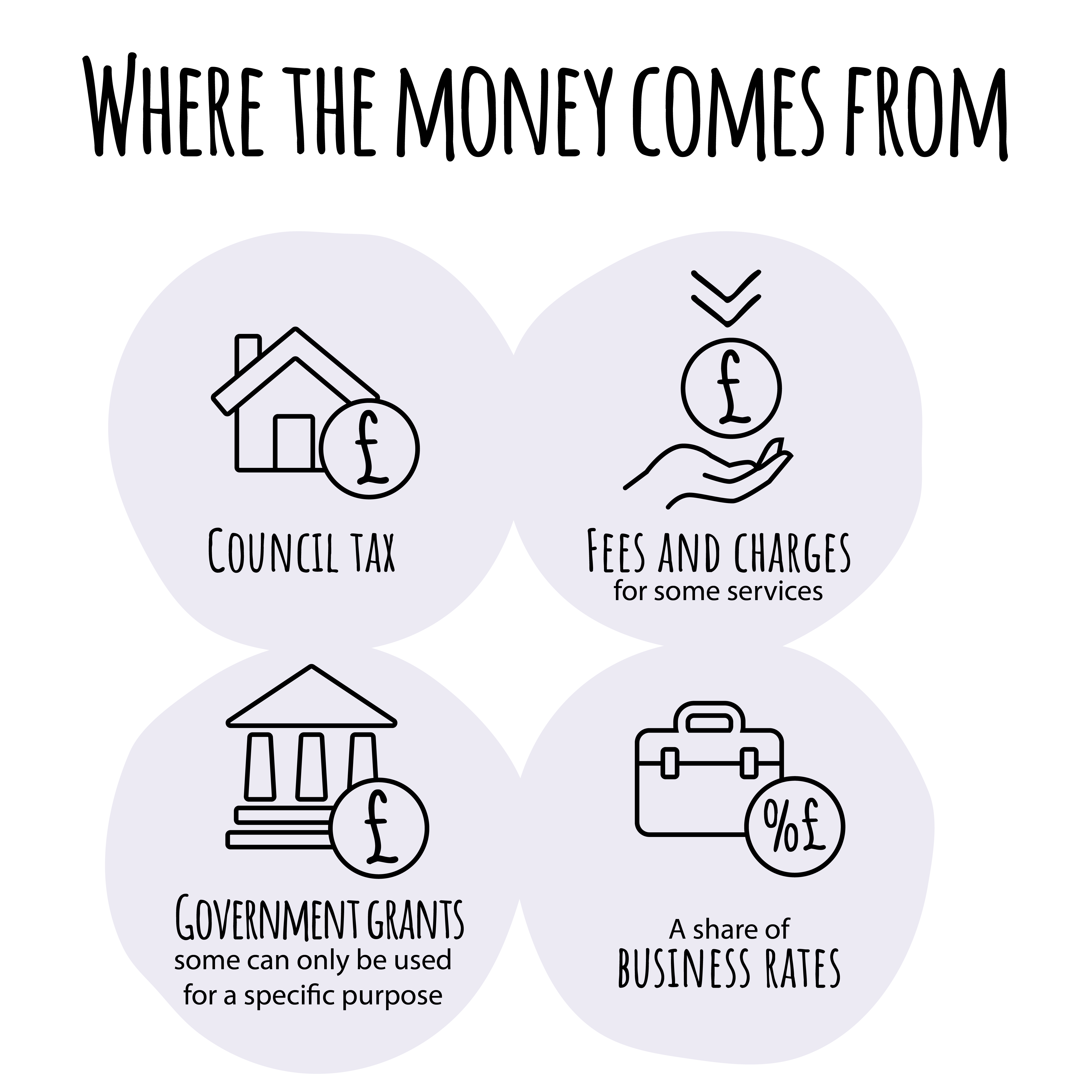
In 2026/27, council tax accounts for 58 per cent of our external income. We are more dependent on council tax than in the past as government grant funding has reduced. In 2010/11, 28 per cent of our funding came from council tax.
What we spend on council services
The figures below show our current budget for 2026/27, as background to the choices we face for 2027/28.
In 2026/27, we plan to spend £999 million on services, excluding schools. In addition, we will spend £273 million on maintained schools and early years providers. This funding comes directly from government and covers teachers, other staff and running costs.
Breakdown of spend: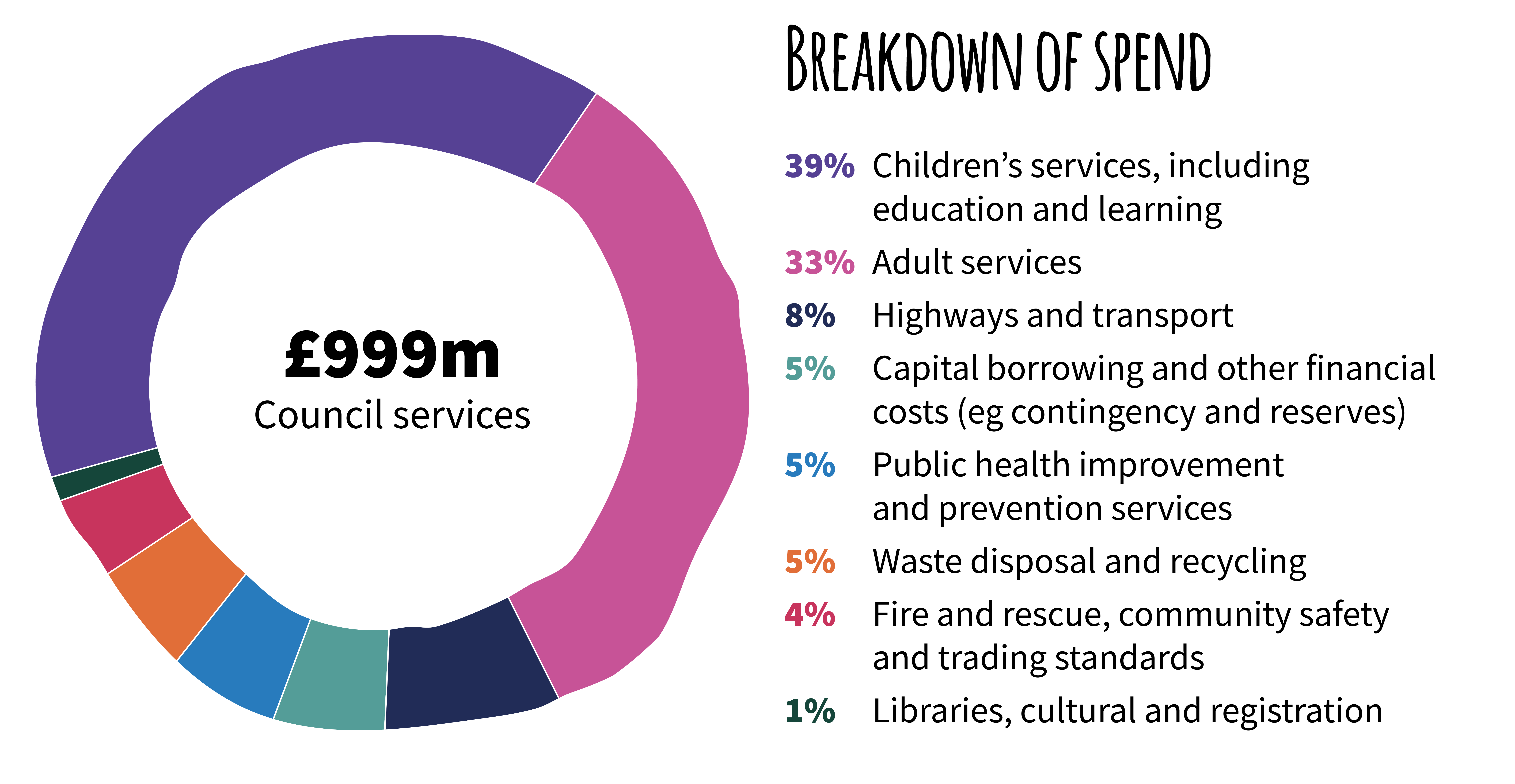
Capital programme
Our £1.4 billion capital programme funds longer-term investment, including road improvements, major infrastructure, school buildings and additional school places. It is funded separately from day to day services, although council tax helps cover borrowing costs.
Four per cent of the county council’s share of council tax supports borrowing for the programme. Most capital funding comes from government grants. Funding allocated specifically for capital projects cannot normally be used for day to day services.
Your views matter
We will summarise your feedback in a report for Cabinet to consider in January 2027, before it makes its final budget recommendations. The budget proposals, including the council tax level, will then be considered for approval by the county council on 9 February 2027.
